논현역 사건은 오래된 질문을 다시 꺼내 들게 했다
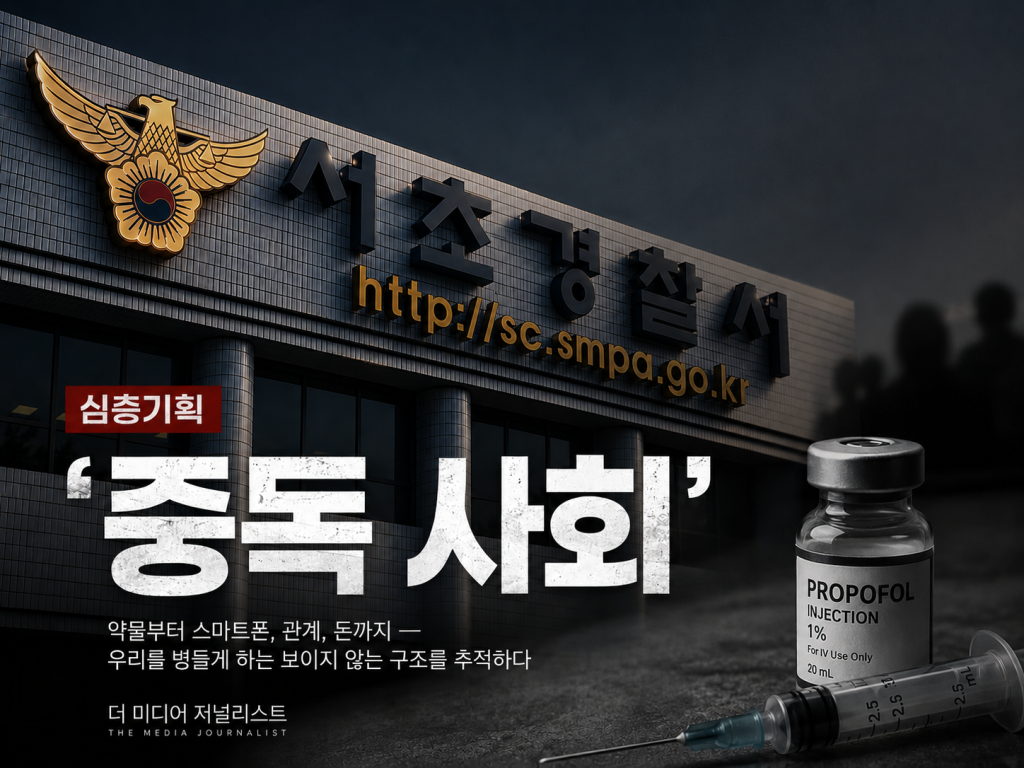
최근 서울 강남 논현역 인근에서 한 여성이 의식을 잃은 채 발견됐고 현장에서는 프로포폴과 주사기가 발견된 것으로 알려졌다. 아직 정확한 사실관계는 확인되지 않았다. 따라서 특정 개인의 삶을 해석하거나 일반화하는 것은 경계해야 한다.
다만 이번 사건은 한국 사회가 오랫동안 안고 있는 질문을 다시 떠올리게 한다.
왜 한국은 세계 최초로 프로포폴을 마약류로 지정한 국가가 되었는가.
그리고 왜 15년이 지난 지금도 프로포폴 문제는 반복되고 있는가.
세계 최초 지정은 남용의 심각성을 보여주는 상징이었다
프로포폴은 원래 수술과 내시경에 사용되는 의료용 마취제다. 의료 현장에서는 매우 유용한 약물이지만 반복 사용 시 의존성과 남용 위험이 꾸준히 제기돼 왔다.
대한의학회 국제학술지 JKMS에 게재된 「Propofol Abuse in Professionals」에 따르면 한국은 2011년 세계 최초로 프로포폴을 향정신성의약품으로 지정했다. 연구자는 이 조치가 예방적 규제가 아니라 이미 현실화된 남용 문제에 대한 대응이었다고 분석한다. 실제로 2000년부터 2011년까지 프로포폴 관련 사망 36건 중 20건이 남용과 직접 관련이 있었고, 사망자의 70% 이상은 의료 종사자였다. 또한 전국 61개 대학병원 조사에서는 7개 병원에서 의료진의 프로포폴 남용 사례가 보고됐다.
세계 최초 지정이라는 기록은 자랑이 아니라 경고였다.
프로포폴은 쾌락보다 회피와 더 깊은 관련이 있다
중독을 흔히 쾌락 추구의 문제로 이해하지만 정신의학은 조금 다른 설명을 제시한다.
JKMS 논문은 프로포폴이 뇌의 도파민 시스템에 영향을 미치며 다른 중독성 약물과 유사한 특성을 가진다고 설명한다.
그러나 실제 중독의 핵심은 즐거움을 얻는 것이 아니라 고통을 제거하는 데 있다. 정신의학에서는 이를 ‘음성 강화(Negative Reinforcement)’라고 부른다. 불안과 스트레스, 공허를 잠시라도 잊기 위해 특정 행동이나 약물을 반복하게 되는 현상이다.
사람들은 프로포폴을 원하는 것이 아니라 현실의 고통이 멈춘 상태를 원하는 것이다.
치유 콘텐츠는 넘치는데 왜 사람들은 더 불안해지는 것일까
오늘날 한국 사회는 힐링과 치유의 시대라고 불린다. 명상, 마음챙김, 심리상담, 자기돌봄 콘텐츠가 넘쳐난다. 그러나 동시에 우울증과 불안장애, 공황장애, 수면장애 역시 증가하고 있다.
오스트리아 정신과 의사 빅터 프랭클은 저서 『죽음의 수용소에서(Man’s Search for Meaning)』를 통해 인간이 삶의 의미를 잃을 때 ‘실존적 공허(Existential Vacuum)’를 경험한다고 설명했다.
이는 단순한 스트레스 상태가 아니다. 왜 살아야 하는지, 무엇을 위해 살아야 하는지에 대한 방향을 잃어버린 상태를 의미한다.
명상은 긴장을 완화할 수 있다. 상담은 상처를 이해하도록 도울 수 있다. 그러나 인간 존재의 목적과 의미를 대신 제공하지는 못한다. 그래서 현대인은 이전보다 더 많은 위로를 소비하면서도 더 깊은 공허를 경험하는 역설 속에 살아간다.
성경은 인간 문제의 근원을 더 깊은 곳에서 찾는다
의학은 프로포폴의 위험성을 설명한다. 심리학은 인간의 공허를 설명한다.
성경은 한 걸음 더 들어간다.
성경은 인간의 근본 문제를 단순한 중독이나 불안, 우울이 아니라 하나님과의 관계 단절에서 찾는다. 인간은 본래 하나님을 의지하도록 창조되었지만 그 관계가 끊어진 이후 끊임없이 다른 것으로 자신의 공허를 채우려 한다는 것이다.
예레미야 2장 13절은 이를 “생수의 근원 되는 나를 버리고 스스로 웅덩이를 팠다”고 표현한다.
이 구절은 인간이 진짜 물을 버리고 물이 새는 웅덩이로 갈증을 해결하려 한다는 비유다.
돈과 성공, 명예와 관계, 소비와 쾌락은 모두 일정 부분 만족을 줄 수 있다. 그러나 그것들이 인간 존재의 근원이 될 수는 없다. 그래서 사람은 채워지는 듯하지만 다시 공허해지고, 만족하는 듯하지만 더 강한 자극을 찾게 된다.
성경은 이를 죄의 문제로 설명한다. 단순히 나쁜 행동을 의미하는 것이 아니라 하나님 대신 다른 것을 중심에 두고 살아가는 상태를 의미한다.
결국 프로포폴보다 더 중요한 질문이 있다
논현역 사건의 진실은 앞으로 수사를 통해 밝혀질 것이다. 그러나 이번 사건을 계기로 한국 사회가 스스로에게 던져야 할 질문은 분명하다.
한국이 세계 최초 프로포폴 마약류 지정국이 된 이유는 단순히 하나의 약물 때문만은 아닐 것이다. 그 약물을 찾게 만드는 불안과 공허, 그리고 방향을 잃어버린 시대가 존재하기 때문이다.
따라서 우리가 물어야 할 질문은 프로포폴이 아니다.
우리는 지금 무엇을 의지하며 살아가고 있는가.
A Woman Collapsed in the Heart of Gangnam… Why Did South Korea Become the First Country in the World to Classify Propofol as a Controlled Substance?
The Incident Near Nonhyeon Station Revives an Old Question
Recently, a woman was found unconscious near Nonhyeon Station in Seoul’s Gangnam district, and reports indicated that propofol and syringes were discovered at the scene. The exact facts of the case have not yet been fully confirmed. Therefore, it would be inappropriate to speculate about or generalize from an individual’s circumstances.
Nevertheless, the incident brings back a question South Korea has been confronting for years.
Why did South Korea become the first country in the world to classify propofol as a controlled psychotropic substance?
And why, fifteen years later, does the problem continue to reappear?
Becoming the First Country Was a Sign of Danger, Not an Achievement
Propofol is a medical anesthetic commonly used during surgeries and endoscopic procedures. While highly useful in clinical settings, concerns about dependency and abuse have long surrounded the drug.
According to “Propofol Abuse in Professionals,” published in the Journal of Korean Medical Science (JKMS), South Korea became the first country in the world to classify propofol as a psychotropic controlled substance in 2011. The study argues that the decision was not a preventive measure but a response to an abuse problem that had already become a reality. Between 2000 and 2011, 20 of 36 propofol-related deaths were directly associated with abuse, and more than 70 percent of those deaths involved healthcare professionals. Reports of propofol abuse were also documented in seven of sixty-one university hospitals surveyed.
The designation was not a badge of honor.
It was a warning.
Propofol Is More Closely Linked to Escape Than to Pleasure
Addiction is often understood as a pursuit of pleasure. Psychiatry, however, offers a different perspective.
The JKMS study notes that propofol affects the brain’s dopamine system and shares characteristics with other addictive substances.
Yet the core of addiction is often not the pursuit of pleasure but the removal of pain. Psychiatrists refer to this process as “negative reinforcement”—repeating a behavior or substance use in order to temporarily eliminate anxiety, stress, or emotional emptiness.
People do not necessarily seek propofol itself.
They seek a state in which pain, worry, and inner turmoil seem to disappear.
Why Are People Becoming More Anxious Despite an Explosion of Healing Content?
Modern South Korea is often described as an era of healing and self-care. Meditation programs, mindfulness practices, counseling services, and wellness content have become increasingly popular. Yet depression, anxiety disorders, panic disorders, and sleep-related illnesses continue to rise.
Austrian psychiatrist Viktor Frankl, in his book Man’s Search for Meaning, described this condition as an “existential vacuum”—a state in which people lose a sense of meaning and purpose in life.
This is more than ordinary stress. It is the experience of losing direction and no longer knowing why one lives or what one lives for.
Meditation may reduce tension. Counseling may help individuals understand their wounds. Yet neither necessarily provides an answer to the deeper question of meaning.
As a result, modern individuals often consume more comfort than ever before while simultaneously experiencing deeper forms of emptiness.
The Bible Searches for the Root Cause More Deeply
Medicine explains the dangers of propofol.
Psychology explains human emptiness.
The Bible goes one step further.
Scripture identifies humanity’s deepest problem not merely as addiction, anxiety, or depression, but as separation from God. It teaches that human beings were created to depend upon God, yet after becoming disconnected from Him, they continuously seek substitutes to fill their inner emptiness.
Jeremiah 2:13 describes it this way:
“They have forsaken me, the spring of living water, and have dug their own cisterns, broken cisterns that cannot hold water.”
The image is powerful. Humanity abandons the source of living water and attempts to satisfy its thirst through containers that cannot hold water.
Money, success, status, relationships, consumption, and pleasure may provide temporary satisfaction. Yet none can serve as the ultimate foundation of human existence. As a result, people often find themselves trapped in a cycle of temporary fulfillment followed by deeper emptiness and an increasing desire for stronger stimulation.
The Bible describes this not merely as a behavioral problem but as a problem of misplaced dependence—placing something else at the center where God was meant to be.
There Is a Question More Important Than Propofol
The truth behind the Nonhyeon Station incident will ultimately be determined through investigation. Yet the broader question raised by the event remains.
South Korea likely did not become the world’s first propofol-controlled nation simply because of a drug.
Behind the drug lies anxiety.
Behind the anxiety lies emptiness.
And behind the emptiness lies a society struggling with meaning, direction, and dependence.
The most important question, therefore, may not be about propofol at all.
What are we relying on to sustain our lives today?
저작권자 © '더미디어저널리스트' 무단전재 및 재배포, AI학습 및 활용 금지

작성자 소개