미국·이란, 군사행동 중단에 원칙적 합의
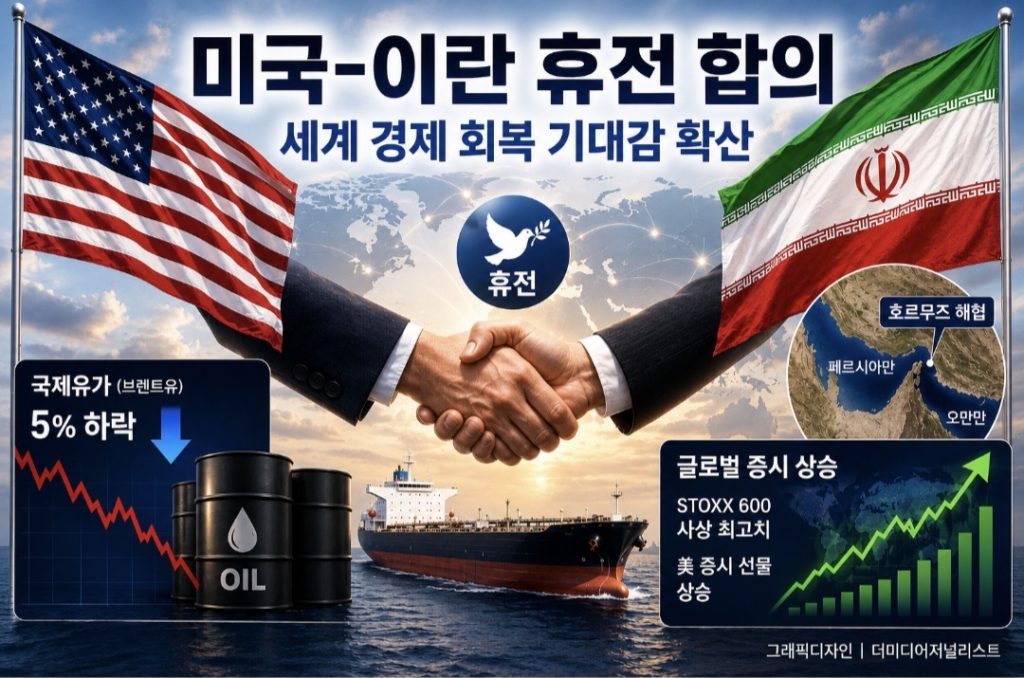
미국과 이란이 군사행동 중단에 원칙적으로 합의하면서 국제 금융시장이 긍정적으로 반응하고 있다.
로이터통신 보도에 따르면 양국은 최근 이어진 군사적 충돌 이후 중재국들을 통한 외교 협상을 거쳐 휴전과 긴장 완화 방안에 합의했다. 이번 합의는 최종 평화협정이 아닌 예비 단계에 해당하지만, 시장은 중동 지역의 지정학적 리스크 완화 가능성에 주목하고 있다.
국제 금융시장은 미래 위험을 선반영하는 특성이 있다. 이에 따라 실제 평화협정 체결 이전에도 갈등 완화 신호만으로 투자 심리가 개선되는 모습을 보이고 있다.
국제유가 하락…전쟁 프리미엄 축소
가장 먼저 반응한 것은 국제 원유시장이다.
로이터통신에 따르면 휴전 소식이 전해진 이후 브렌트유 가격은 약 5% 하락했다. 이는 그동안 국제유가에 반영됐던 지정학적 위험 프리미엄이 일부 제거된 결과로 해석된다.
원유시장은 현재 수급 상황뿐 아니라 향후 공급 차질 가능성까지 가격에 반영한다. 전쟁이나 군사 충돌 위험이 높아질 경우 실제 공급 차질이 발생하지 않더라도 가격이 상승하는 이유가 여기에 있다.
시장에서는 이번 합의가 중동 지역의 원유 공급 안정성을 높이는 신호로 작용했다고 평가하고 있다.
호르무즈 해협 안정화 기대
이번 합의에서 시장이 가장 주목하는 부분은 호르무즈 해협이다.
미국 에너지정보청(EIA)에 따르면 하루 약 2,000만 배럴 이상의 원유와 석유제품이 호르무즈 해협을 통과한다. 이는 전 세계 석유 소비량의 약 20% 수준에 해당한다.
사우디아라비아, 이라크, 쿠웨이트, 아랍에미리트 등 주요 산유국의 원유 수출이 이 해협에 의존하고 있어 군사적 긴장이 고조될 경우 국제 에너지 시장 전체가 영향을 받을 수 있다.
실제로 과거 중동 지역 분쟁이 발생할 때마다 국제유가가 급등했던 배경 역시 공급 부족 자체보다 공급망 교란 가능성 때문이었다.
시장에서는 이번 휴전 합의가 호르무즈 해협을 둘러싼 불확실성을 완화하는 계기가 될 것으로 기대하고 있다.
글로벌 증시도 안도 랠리
주식시장 역시 즉각 반응했다.
로이터통신은 유럽 STOXX600 지수가 사상 최고치를 기록했으며 미국 증시 선물도 상승세를 보였다고 전했다.
이는 투자자들의 위험회피 심리가 완화되면서 위험자산 선호 현상이 강화된 결과로 분석된다.
일반적으로 지정학적 위기가 확대되면 투자자들은 금, 달러, 국채 등 안전자산으로 자금을 이동시킨다. 반면 갈등이 완화될 경우 주식과 기업채권 등 위험자산으로 자금이 다시 유입되는 경향을 보인다.
이번 시장 반응 역시 중동 지역의 불확실성이 완화될 수 있다는 기대를 반영한 것으로 풀이된다.
한국 경제에도 긍정적 변수
이번 합의는 한국 경제에도 긍정적인 영향을 미칠 가능성이 있다.
한국석유공사 통계에 따르면 국내 원유 수입의 약 70% 이상이 중동 지역에서 공급된다. 따라서 중동 정세 변화는 국내 에너지 가격과 물가에 직접적인 영향을 미치는 요인이다.
국제유가가 안정될 경우 항공·해운·물류·정유·석유화학 업종의 비용 부담이 완화될 수 있으며, 전기요금과 운송비 등 에너지 관련 비용 상승 압력도 줄어들 수 있다.
또한 에너지 가격 안정은 소비자물가 상승률 둔화에도 긍정적으로 작용할 수 있어 한국은행의 통화정책 운영에도 우호적인 환경을 제공할 것으로 전망된다.
남은 과제와 변수
다만 시장의 낙관론이 곧바로 현실이 되는 것은 아니다.
이번 합의는 최종 평화협정이 아닌 예비 단계다. 향후 이란 핵 프로그램 문제와 미국의 대이란 제재 완화 여부, 중동 내 친이란 무장세력 문제 등이 후속 협상의 핵심 변수로 남아 있다.
또한 전쟁 기간 동안 위축됐던 해상 물류와 보험시장, 에너지 공급망이 완전히 정상화되기까지는 상당한 시간이 필요할 것으로 전망된다.
전문가들은 휴전 합의가 실제 평화체제로 이어질 경우 글로벌 경제의 불확실성을 크게 줄일 수 있겠지만, 협상 과정이 예상보다 길어지거나 새로운 갈등 요인이 발생할 경우 시장의 기대감 역시 조정될 수 있다고 보고 있다.
시장이 주목한 것은 ‘평화’보다 ‘안정’
국제 금융시장이 이번 합의를 환영한 이유는 단순히 전쟁이 멈췄기 때문만은 아니다.
세계 경제는 코로나19 팬데믹 이후 공급망 위기, 러시아-우크라이나 전쟁, 고물가와 고금리 등 연쇄적인 충격을 겪어왔다. 이러한 상황에서 중동 지역의 긴장 완화는 에너지 공급망 안정과 물가 부담 완화, 투자심리 회복이라는 세 가지 긍정적 신호를 동시에 제공하고 있다.
결국 시장이 평가하는 핵심은 휴전 자체보다 불확실성 감소다. 국제유가 하락과 증시 상승은 투자자들이 중동발 리스크 축소 가능성을 선반영하고 있음을 보여준다. 다만 이번 합의가 아직 예비 단계에 머물러 있는 만큼, 향후 협상 결과가 글로벌 경제의 향방을 결정하는 중요한 변수가 될 전망이다.
US-Iran Ceasefire Agreement Raises Hopes for Global Economic Recovery
US and Iran Reach Principle-Based Ceasefire Agreement
The United States and Iran have reached a preliminary agreement to halt military actions, prompting a positive response from global financial markets.
According to Reuters, the two countries agreed to a ceasefire and de-escalation measures following diplomatic negotiations facilitated by intermediary nations. Although the agreement falls short of a formal peace treaty, investors have focused on the possibility of reduced geopolitical risks in the Middle East.
Financial markets tend to price in future risks and opportunities ahead of actual developments. As a result, even a preliminary agreement has been sufficient to improve investor sentiment.
Oil Prices Fall as Geopolitical Risk Premium Eases
The international oil market reacted immediately to the news.
Reuters reported that Brent crude prices fell by approximately 5% following reports of the ceasefire agreement. Analysts attributed the decline to a reduction in the geopolitical risk premium that had been built into energy prices during the period of heightened tensions.
Oil markets reflect not only current supply and demand conditions but also expectations regarding future disruptions. When the risk of conflict increases, prices often rise even before any actual supply interruption occurs.
The latest agreement has therefore been interpreted as a signal of greater stability in global energy supplies.
Focus on the Strait of Hormuz
One of the most significant aspects of the agreement is its potential impact on the Strait of Hormuz.
According to the U.S. Energy Information Administration (EIA), more than 20 million barrels of crude oil and petroleum products pass through the Strait of Hormuz every day, accounting for roughly 20 percent of global petroleum consumption.
Major oil-exporting countries—including Saudi Arabia, Iraq, Kuwait, and the United Arab Emirates—depend heavily on this route. Any disruption to shipping traffic in the strait can have immediate consequences for global energy markets.
Historically, spikes in oil prices during Middle East conflicts have often been driven more by fears of supply-chain disruption than by actual shortages. The ceasefire agreement is therefore viewed as a potential step toward stabilizing one of the world’s most critical energy corridors.
Global Markets Respond Positively
Equity markets also welcomed the development.
Reuters reported that the pan-European STOXX 600 index reached a record high, while U.S. stock futures moved higher following the announcement.
The rally reflects a shift from risk-off sentiment toward risk-on behavior among investors. During periods of geopolitical uncertainty, capital typically flows into safe-haven assets such as gold, government bonds, and the U.S. dollar. When tensions ease, investors often return to equities and other risk-sensitive assets.
Market participants appear to view the ceasefire as a sign that one major source of global uncertainty may be diminishing.
Potential Benefits for South Korea
The agreement could also have positive implications for the South Korean economy.
According to data from the Korea National Oil Corporation, more than 70 percent of South Korea’s crude oil imports originate from the Middle East. As a result, developments in the region have a direct impact on domestic energy prices and inflation.
Lower oil prices could reduce operating costs for industries such as aviation, shipping, logistics, refining, and petrochemicals. Energy price stability may also help ease inflationary pressures and support consumer spending.
For policymakers, a more stable energy environment could provide additional flexibility in balancing growth and inflation concerns.
Challenges Remain
Despite the optimism, significant uncertainties remain.
The agreement represents a preliminary framework rather than a final peace settlement. Future negotiations will likely address issues such as Iran’s nuclear program, U.S. sanctions policy, and the activities of Iran-backed groups across the region.
In addition, shipping, insurance, and energy supply networks affected by the conflict may take time to fully normalize.
Analysts caution that while the agreement has reduced immediate tensions, long-term stability will depend on the successful implementation of future diplomatic arrangements.
Markets Welcome Stability More Than Peace
The positive market reaction is not simply about the cessation of hostilities.
Since the COVID-19 pandemic, the global economy has faced a series of disruptions, including supply-chain crises, the Russia-Ukraine war, persistent inflation, and elevated interest rates. Against this backdrop, any reduction in geopolitical uncertainty is viewed favorably by investors.
The simultaneous decline in oil prices and rise in stock markets suggests that investors are pricing in the possibility of a more stable global economic environment. While the ceasefire remains preliminary, it has strengthened hopes that one of the world’s most significant geopolitical flashpoints may be moving toward de-escalation.
저작권자 © '더미디어저널리스트' 무단전재 및 재배포, AI학습 및 활용 금지

작성자 소개